
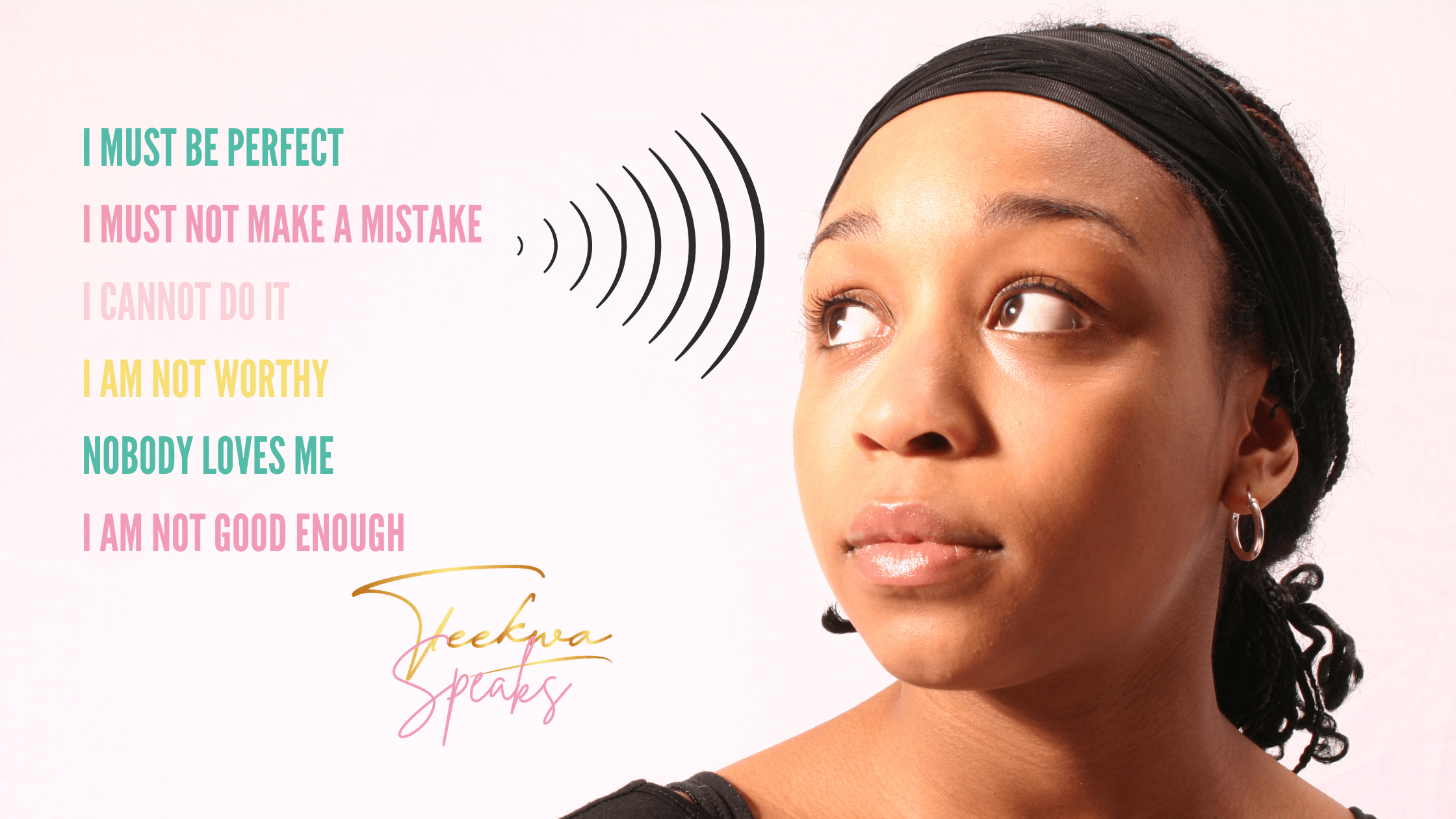
Self-sabotaging behaviors prevent you from conditioning yourself for success. And changing those long, established behavior patterns like self-sabotage is as difficult as recognizing and understanding them.
I'll be honest with you. I never had any doubt in my ability to do things, But I did find myself afraid of success at one point because I can feel it in my bones. I had many successes in my, life and I have strived to do what I can do in my life. At times, I caught myself doubting myself. One day, I would say, ?I am going to be a millionaire.? However, my self-talk will say, ?Nobody in your family ever been a millionaire.? This is being negative to yourself, self-doubt, and you don't want to continue that. Are you ready to go down that road to success? Do you continue to have self-doubt about it? You feel like your phony, or you feel is hard. It's hard to believe that people are going to put their trust in you. You still feel this self-doubt regardless of your success or how much you already achieve. We all felt this way one time or another in our life. Some more than others, it is common for a lot of business owners. I surrounded myself with many like-minded people and found out that I was not the only one who experiences this. Okay, thank God nothing is wrong with me. It was a relief that someone felt this at one point.
So, understand what imposter syndrome is. The first discovery of understanding feels like you're phony. So, if you have an imposter syndrome, and you believe that you don't know what you actually do know, you think that you're just faking it and that others are crazy for assuming that you know what you're doing. That is one of the qualities of imposter syndrome. And then the second one would be fear of being discovered as a fraud. Everyone with imposter syndrome worries about that dreadful day coming, the day everyone finally figures out you're a fraud. Those with imposter syndrome set standards that are far too rigorous setting more reasonable standards can help tremendously. Then the anxiety that arises from worrying about being uncovered as a fraud can be considered. Those are one of the top two primary qualities of those with imposter syndrome. The third one would be an inability to accept success as genuine. It's common to assign success to external factors such as luck, the right place at the right time, or having the right connections. You have to believe in your mind that it's not just luck, or you're in the right place at the right time. You have to understand that you have gifts, have talents, and people come to you, and people know who you are, what you do, and what you can do for them. Having an inability to accept success as genuine, you have to get your mindset right. I concentrate on the mindset daily because of things like this because people do really suffer from imposter syndrome. I had this one coworker; she was very good at what she does and organized. However, she always questioned herself. Oh my god, that drove me crazy because she was one of the best administrators. She always had everything in order, where we didn't have to do anything in her absence. At the events she coordinated, all we had to do was show up at the event or conference. If we needed to cover her at her desk, all the materials were ready for her boss in advance. The problem was she was suffering from imposter syndrome; she felt that she wasn't good enough. Because we did not know much about imposter syndrome, we used to think that this girl was crazy. These different types of imposter syndrome are real. So, having imposter syndrome makes it challenging to accept that one skill and expertise are the reasons for success.
It's also common to overestimate the abilities of others. If something is easy to accomplish for someone with imposter syndrome. The assumption is that it's easy for everyone, even when it's not. They fail to recognize that their knowledge and skills make it easy.
So I'm going to ask you, how many of these qualities do you possess? Those with imposter syndrome manifest their predicament in different ways.
There are no hard or fast rules. It is generally accepted that there are just five basic types of imposters:
- Expert: This type of imposter believes that they lack the knowledge necessary to be successful. They spend a lot of time looking for new things to learn. They always seem to need to learn just one more thing, and then they'll have the confidence that they need to apply themselves. But, unfortunately, that day never comes. There's always something else they believe they need to learn.
- Soloists: This type avoids asking for help. You feel that you must do everything on your own. There are two reasons for this. The first reason is you believe that you are exposed as a fraud if you ask for help. So, you try to do it alone. The second reason, you believe that a true expert never needs help. But this couldn't be further from the truth. Okay, while you think that you receiving help means you have achieved nothing. In reality, experts get help all the time.
- Genius: You believe that anything that requires hard work is something you don't do well. An expert should be able to handle anything quick and easily. The expert feels inadequate in a touch of shame if they can't complete a task easily. that's you,
- Perfectionist: The perfectionist is never happy. A perfectionist sets impossibly high standards and confirms their lack of expertise by failing to attain them. If you actually do attain your high standards, you believe that you should have done more. So, this is a no-win situation.
- Superhero: They believe you are incompetent when comparing yourself to their fellow VA or business partner. For those who work in corporate America, it can be a colleague. They attempt to prove their worth by outdoing everyone. You are the person that works weekends when it is necessary. Comes in early and stays late to do extra projects to outdo somebody else.
Imposter syndrome can manifest itself in more than one way. So while the root of the issue is always the same. How this is interpreted by each imposter can vary.
How, then, can you eliminate sabotaging beliefs and emotions? First, understand and accept yourself before attempting to understand and accept others. You have to take a journey within for personal evaluation. This means looking inside yourself and listening to your inner dialogue or self-talk. Remain open-minded to what you see and hear when understanding your beliefs. This is essential when making constructive changes in your behaviors. Deciding how far and deep you want to go before introspection is your decision. However, you can take your life to a new level by discovering empowering insights to eliminate damaging self-talk and undermining behaviors.
Deciding to let go of self-sabotaging behaviors that prevent you from changing takes courage and a personal commitment to develop more effective actions. Before you believe you can change the beliefs and behavior of others, you have to first change yourself. This means overcoming resistances and sabotaging behaviors that have prevented you from experiencing an optimistic attitude. No matter what obstacles you face, developing an optimistic attitude, and changing unrewarding behaviors and beliefs, will awaken you to eliminate self-sabotaging behaviors.
What specific actions can you take to become aware of and overcome your sabotaging beliefs and self-defeating emotions?
- Recognize that you are at the crossroads where your decisions and choices are yours and yours alone.
- Realize that you?re the one making the conscious decision to change your damaging self-talk and undermining beliefs and behaviors. No one else can do it for you.
- Change ?I Can?t? or ?I Won?t? to ?I Can, I Will? consistently. Pay attention to the emotional changes going on within you. Be prepared to physically describe your changes and write them down. Repeat the process of writing down your changing feelings and behaviors and compare your notes every day. Measure your progress by the visible reoccurrences of positive self-talk and healthy behaviors. Continual negative self-talk will create resentments and disempowering beliefs. Self-resentment is the seed that grows into self-sabotaging behaviors.
- Plant the seeds that produce positive, empowering beliefs and actions. Ask yourself, ?Are my actions linked to pleasure-producing situations or to pain-producing situations?? Take the road that gives you pleasure, not grief. The personal growth experienced from facing a fearful or painful event, or adversity, is important for self-improvement. However, don?t make a steady diet of it. You can grow and change by cultivating positive emotions such as joy, excitement, and happiness.

Did you find This Blog Post Helpful?
If you did, let me know in the comments below!
And feel free to share this post with your friends.

Name it, Claim it, Faith it, & Take Action!
Sis, Start Your Biz!
Teekwa Scarborough
Business Christian Coach
FREE Consultation: "30 min Consultation"
Hire a VA or VA Team
Instagram: https://www.instagram.com/coachteekwa/
Facebook: https://www.facebook.com/coachteekwa